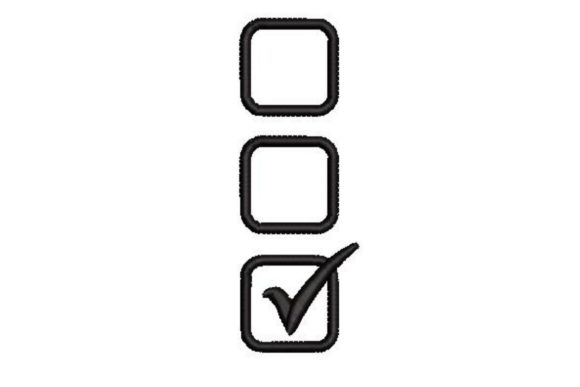
Tick Boxes
A Bold Choice for Craft Fair Success
Tick Boxes immediately stands out as a design that feels both playful and functional. Its title suggests a sense of organization and charm, which aligns well with the School category. The description hints at a versatile embroidery that can be paired with checklists, making it ideal for creative educators, students, or anyone who appreciates a touch of whimsy in their everyday life.
Visual Appeal and First Impressions
The first impression of Tick Boxes is one of simplicity with a hint of personality. It doesn’t scream for attention but has a subtle charm that invites closer inspection. This makes it perfect for craft fair displays where visual appeal needs to balance between being noticeable and not overwhelming. The design’s clean lines and minimalistic approach suggest a modern aesthetic, while the potential for customization allows it to adapt to various styles and markets.
Performance on Popular Craft Fair Products
Tick Boxes performs exceptionally well across a range of craft fair products. On tote bags, it adds a fun and practical element, especially when paired with a checklist. Aprons benefit from its light and airy feel, making it a great addition to kitchen or classroom use. Tea towels are another excellent canvas, where the design can add a touch of personality without overpowering the fabric.
Embroidered patches are a standout application for Tick Boxes, offering a compact and wearable version of the design. Caps and fabric pouches also showcase the design’s versatility, allowing it to be used as either a small accent or a focal point. Pillow covers and market bags further expand its reach, making it suitable for a wide variety of handmade product types.
Practical Selling and Production Considerations
One of the key strengths of Tick Boxes is its clarity. At a glance, the design is easy to understand, which is crucial for attracting customer interest at a booth. It works equally well as a small accent or a large focal design, giving sellers flexibility in how they present their products.
Photographically, Tick Boxes looks great on both light and dark fabrics, though care should be taken with dark colors to ensure thread contrast is visible. The design also translates well to printable mockups, helping Etsy sellers and small shop owners create compelling online listings.
For batch production, Tick Boxes offers good repeatability. However, designers should consider stitch density and spacing to ensure the design remains clear and legible, especially on smaller items like patches or caps. Using the right stabilizer and confirming the appropriate hoop size will help maintain quality across multiple units.
Careful Use Notes
While Tick Boxes is generally user-friendly, there are a few areas where extra care is needed. Dense stitch areas may require more stabilizer to prevent puckering, and tiny details could be lost on textured fabrics like tea towels or thick materials. Small lettering should be tested on scrap fabric to ensure visibility, and curved surfaces like caps may need additional adjustments for even stitching.
Designers should also be mindful of how the design appears at smaller sizes. While it looks great on larger items, scaling down might reduce its impact. Testing the design on a variety of fabric textures and comparing color combinations will help ensure the final finished product meets expectations.
Impact on Visual Appeal and Customer Engagement
Tick Boxes has the potential to enhance the visual appeal of any handmade product. Its playful yet organized nature makes it appealing to a broad audience, including students, teachers, and craft enthusiasts. The design’s ability to blend into different settings—whether farmhouse, modern, or rustic—makes it a versatile choice for various markets.
From a sales perspective, Tick Boxes can increase customer engagement by offering a unique and personalized touch. When displayed alongside other craft fair products, it can draw attention and encourage buyers to explore more. Its adaptability also supports brand consistency, allowing sellers to maintain a cohesive look across their product line.
Practical Embroidery Designer Notes
Before mass production, it’s essential to test Tick Boxes on scrap fabric to assess stitch density and thread contrast. Checking the design on different fabric types will help identify any issues with clarity or texture. Confirming the correct hoop size and using the right stabilizer will ensure consistent results.
Creating at least one real mockup is a must, as it provides a tangible representation of the design. Comparing fabric colors and reviewing the embroidery file for any hidden details will help avoid surprises during production. Lastly, verifying commercial licensing is crucial before selling finished products to protect both the designer and the seller.
Final Thoughts on Tick Boxes
Tick Boxes is a promising design that offers a balance of style, functionality, and adaptability. Whether used as a small accent or a bold statement, it has the potential to stand out in a crowded craft fair environment. With careful planning and attention to detail, this design can become a valuable asset for any handmade product line, supporting both creativity and profitability.